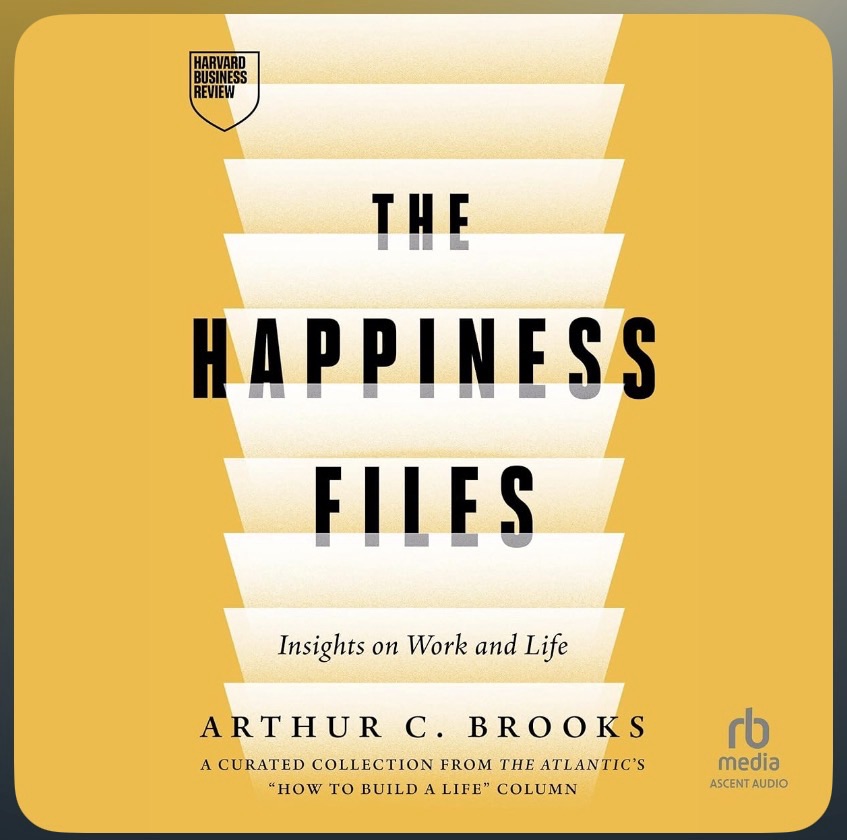
Book notes: The Art of Spending Money by Morgan Housel

Morgan Housel makes the case that spending money well is a deeply personal art—shaped far more by your values, identity, and expectations than by the size of your paycheck. The real goal isn’t to accumulate more, but to reach a place where nothing feels missing.

The Art of Spending Money by Morgan Housel book summary review and key ideas

Get the audiobook on Audible 👇 (affiliate link)

The Art of Spending Money: Simple Choices for a Richer Life by Morgan Housel

The Art of Spending Money by Morgan Housel

Date read / Format:

April 2026 | Audiobook


Synopsis:

From the bestselling author of The Psychology of Money and Same as Ever, lessons on harnessing the power of money to live a happier life

Most of us don’t know how to spend money. We chase things that impress others but leave us cold. Or we save endlessly, afraid to spend on what would actually make life better. We confuse admiration with envy, comfort with excess, and utility with status.

The Art of Spending Money doesn’t provide budgets, hacks, or one-size-fits-all solutions. It gives you understanding of how your relationship with money shapes your decisions—and how to reshape it so money works for you.

Morgan Housel’s work has helped millions rethink how they earn, save, and invest. Now he turns his attention to the other side of the equation: how to spend. With insight and warmth, he shows why the most valuable return on investment is peace of mind, why expectations matter more than income, and why doing well with money has less to do with spreadsheets and more to do with self-awareness.

This book isn’t about getting rich. It’s about getting the most out of what you already have—and learning to want what’s worth wanting.” -Audible


~If you enjoy my summary, please consider buying me a coffee via my Ko-Fi link (click the button below) or support this blog in one of several ways! 📖 🎓

I appreciate every donation as it goes directly to the maintenance costs of my blog and creation of new content. 😊

Buy Me a Coffee at ko-fi.com

Opening thoughts:

I’ve been wanting to read this book since it came out because I’m a huge fan of the author’s other work, The Psychology of Money—which is easily one of my top 3 recommended reads for anyone interested in personal finance. I heard about this book when Morgan Housel made a guest appearance on The Tim Ferriss Show, and I knew immediately I had to check it out. I went in expecting a lot of notes, and it did not disappoint.


Key notes:

Introduction: The Quest for the Simple Life

  • There’s a saying: there’s nothing worse than getting what you want, but not what you need
  • Knowing how to acquire money is not the same as knowing how to use it
  • Spending money is an art because it’s not a one-size-fits-all science
  • The best use of money is as a tool to leverage who you are, but not to define who you are

Chapter: All Behavior Makes Sense With Enough Information

  • A lot of spending decisions might not make sense to you until you peel back the onion layers of someone’s personality—layers shaped by their unique experiences
  • People aren’t rational; they are rationalizing
  • Emotions are learned and are a product of the culture and environments we are raised in
  • The concept of common sense is mostly a product of geography and depends heavily on where you were raised
  • Don’t let anyone tell you what you should or shouldn’t spend your money on—there is no right way, and what makes you happy will be different from what makes others happy
  • Personal finance is more personal than it is finance
  • Be careful judging how other people spend their money

Chapter: May I Have Your Attention Please

  • You think you want nice stuff, but what you really want is respect, admiration, and attention
  • Exercise: write out your obituary the way you want it to read, then take action on making it happen
  • If you gain respect and admiration for who you are rather than for what you own, your desire to spend money on flashy things naturally drops
  • It’s important to identify whose respect and admiration we want most—which is usually our family and close friends—and what they would respect and admire about us is
    • How we make them feel
    • How we treat them
    • How helpful we are
  • Usually, the things that made us happy at a lower income are the same things that make us happy at a higher one: making memories and spending quality time with loved ones

“One of the tricks in life is realizing that people would admire you more if they aren’t jealous of you”

Benjamin Franklin

Resume virtues vs eulogy virtues:

“You’ll really measure your success in life by how many of the people you want to have love you actually do love you”

Warren Buffett

Chapter: The Happiest People I Know

  • If your expectations grow faster than your income, you’ll never be happy with your money
  • The key to happiness is being content with what you have—and its antidote is focusing on what you don’t have
  • Psychological wealth is such an important concept, and with money, it comes from having the right expectations
    • Happiness is contentment
      • Contentment is what you have relative to what you want
  • The key is realizing that happiness is the state when nothing is missing, regardless of the lifestyle you’re living
  • Desire is a hidden form of debt that must be repaid before you get to feel any happiness
  • Usually, what most people want with money is something they don’t yet have—and dopamine keeps spurring them to want more
  • The only way to win is to stop playing and be content
    • There are few greater monetary joys than realizing that you have everything you need right now to be as satisfied—even as happy—as you can be
  • The best measure of wealth = what you have – what you want
    • The calculation becomes more nuanced when you factor in how important expectations and contentment really are

Chapter: Everything You Don’t See

  • If you’re already miserable, having more money might not do much for you
  • When you achieve your goals and realize it doesn’t make you happy or fulfilled, that can cause hopelessness
  • Money could make you a bit happier—it’s just less of a miracle drug than we typically assume
  • Never focus on what money can do for you without a clear understanding of the cost of acquiring more of it

Chapter: The Most Valuable Financial Asset Is Not Needing to Impress Anyone

This chapter tells the story of two sailors who entered a round-the-world race. Neither of them finished, but in very different ways: the first was a fraud who ultimately took his own life out of shame, while the second was a legitimate sailor who found peace by quitting and charting his own path—and eventually set a world record for the longest non-stop solo voyage, finding happiness in doing something for himself rather than for others.


Chapter: What Makes You Happy

  • A good life is everything you need and some of what you want—if you have everything you want, you appreciate none of what you have
  • There’s no such thing as an objectively good experience
    • Every amount of “good” is just a gap between expectations and reality—the contrast, not the amount, is what makes you happy
  • Occasional treats can generate more joy than perpetual luxury
  • There’s often more psychological upside to managing your expectations down rather than attempting to push your circumstances up
  • A simple life can be the most potent way to enjoy luxury items

Chapter: The Rich and the Wealthy

  • Being controlled by money is a hidden form of debt—and like all debts, it will eventually be repaid, with interest
  • Studies show that having more money is more likely to make you happy if you were already happy before you had more money
  • Stoic wisdom: You’re unlikely to have a good and meaningful life unless you can overcome your insatiability

Chapter: Utility vs. Status

  • The value of anything is its ability to help you live the life you want. Nothing more
  • Conforming to others’ views is a sacrifice that has a real but hidden cost in life
  • Utility, by contrast, is deeply selfish in a beautiful way—your top goal becomes bettering your own life and the lives of those you care about
    • The opinions and attention of others be damned
  • By letting yourself be yourself without pandering to what others might want you to be, you get to focus on what you’re actually good at—and what genuinely makes you happy
  • The key to success in so many areas of life is endurance and longevity
    • Don’t be interested in anything that’s unsustainable

Chapter: Risk and Regret

  • Good advice is never as simple as saying “live for today” or “save for the future” — the only good advice isminimize future regret
  • Two ideas when thinking about financial decisions:
    1. Good memories are the closest thing to living for today while also compounding for tomorrow — compounding good memories and experiences over time is just as powerful as compounding money
    2. Saving for the future creates independence today — every dollar not spent today is another dollar of options, freedom, and less stress for the future
      • View savings as providing the benefit of independence today

Chapter: Look at Them

Jealousy, envy, and the priceless art of not caring what others think
  • Motivation from others’ success is good, but being envious of others is mental torture—like signing a contract with yourself to be miserable
  • You can never win the status game—once high status is attained through things that many people own, it’s no longer high status
  • Being jealous of what others have is outsourcing your critical thinking to strangers
  • Envy is inversely correlated with self-examination—the less you know yourself, the more you look to others to gauge your worth
    • The more you delve into who you are, the less you need from others
  • Who you socialize with can have as big an impact on your material happiness as how much money you make or spend
  • The simplest formula for a pretty nice life = independence + purpose

Chapter: Wealth Without Independence Is a Unique Form of Poverty

  • Trading money for time rather than trading money for stuff—because having more time will provide greater joy in your life, this is probably the most overlooked aspect of spending money
    • To most people, the extra time and mental clarity you get from independence and savings doesn’t feel like spent money—but it is, and it’s worth it

Chapter: Social Debt

When how you spend your money influences what people think of you in unwanted ways
  • Possessions are chameleons that change from fantasies into responsibilities once you hold them in your hands

“The best position to be in is rich and anonymous”

Naval Ravikant

Chapter: Quiet Compounding

The fastest way to get rich is to go slow
  • Two ways to use money:
    1. As a tool to live a better life
    2. As a yardstick of success to measure yourself against others
      • The first is quiet and personal; the second is loud and performative
  • Money that comes quickly tends to leave quickly
  • Building wealth slowly through compounding makes you more future-focused
    • You start asking how to create a better life rather than how to get more attention
    • That allows you to foster one of the most powerful financial skills: endurance
  • Speed gets all the attention, but slow has all the power

Chapter: Identity

When money controls who you are
  • Keep your identity small—it gives you clarity and simplicity
  • Save enough money so that you never have to think about it
  • The way to raise children without making them spoiled or entitled is to not make the family identity about money—especially by acknowledging that it doesn’t make you superior to anyone, and that what’s more important are your values and how you leverage money in the right ways
  • Money should always be a tool to leverage who you are, not a goal in itself

Chapter: Try Something New

  • Within the confines of your budget, experiment with as many types of spending as you can—cutting quickly and without mercy the things that aren’t working for you
  • Einstein’s advice: find what works and just do that, ignore the rest
  • Ramit Sethi’s principle: spend extravagantly on the things you love as long as you cut mercilessly on the things you don’t
  • Price does not guarantee quality or more happiness
    • Branding usually just signals consistency that customers can rely on
  • Theory: the more susceptible you are to advertising, the less satisfied you are with your own life
    • You’re desperate for someone to tell you what to like because you haven’t yet figured it out for yourself

“You are rich if money you refuse tastes better than money you accept”

Nassim Taleb
  • Trying new things creates variety in life, which is a value all on its own
  • Remember that the ones who love you almost certainly don’t want your money as much as they want your love and attention

Chapter: Your Money and Your Kids

Values, hard work, support, and the opposite of spoiled
  • So much of success in life is learning how to fail—but not failing so hard that you can’t recover
  • Warren Buffett says it’s good to have people in your life that you don’t want to disappoint
  • Your kids are paying attention, always and all the time, whether you realize it or not
  • Kids may want your money, but what they’ll come to value and remember you by are the deeper values that money can’t buy

Chapter: Spreadsheets Don’t Care About Your Feelings

When emotions are more insightful than numbers
  • Realize that not all emotional financial decisions are reckless—many of them are profoundly important

Chapter: The Finer Things

The wisdom and futility of obsessing over small purchases

“Tend to the small things. More people are defeated by blisters than mountains”

Kevin Kelly
  • Small changes at scale yield massive impact
  • The amount of attention a problem gets is often the inverse of its importance

Chapter: The Lifecycle of Greed and Fear

It begins innocent, turns crazy, and ends up right where you began
  • Greed happens when you double down on actions that at one time worked but aren’t sustainable—or that caused you to overestimate how influential your actions were on outcomes
  • Fear does the most damage when your biggest fear is wondering what else you should be fearful of

Chapter: How to Be Miserable Spending Your Money

A brief guide to bad decisions

Succeed by first knowing what to avoid:

  1. Direct your gaze at the socioeconomic level just above yours, thinking you’ll achieve lasting happiness by having just a little bit more
  2. Pursue status at the expense of happiness
  3. Let money become a core part of your identity
  4. Spend so much of your income that you become completely reliant on the decisions of other people—bosses, bankers—many of whom couldn’t care less about you
  5. Fantasize that having more money is the solution to all your problems
  6. Assume that money can solve none of your problems and that money is the root of all ego and evil
  7. Have such a fierce saving ideology that you could never treat yourself to a good life that you could actually afford
  8. When taking stock of your life, assume all your successes are because of your hard work and all your failures are due to bad luck—and when judging others, assume the inverse
  9. Place ego over empathy
  10. Assume that everyone’s external social media presence means they have a good and happy life in all areas
  11. Ignore the unexpected hidden costs of your purchases
  12. Have no sense of what you might regret down the line
  13. Associate net worth with self-worth—for yourself and others
  14. Treat all financial decisions as pure math decisions without taking into consideration the emotional, sentimental, or other factors that fill your soul
  15. Be more concerned with making the spreadsheet happy than making yourself happy
  16. Look to what society and marketers say you want, rather than figuring out what actually makes you happy
  17. Anchor your lifestyle expectations to the most successful people you know
  18. Risk what you need to gain what you don’t need
  19. Be so optimistic that your expectations grow faster than your income
  20. Resist trying new things and resist your natural desire to grow, learn, and adapt

Reader’s note: This chapter gave me an idea for a book—a reverse personal development book where, instead of telling people how to live a good life, the whole premise is giving advice on how to live a bad one. I’m sure it’s been done before, but it perfectly fits a style that matches my personality: a little bit of sarcasm wrapped around genuinely thought-provoking ideas


Chapter: The Luckier You Are, the Nicer You Should Be

My simple path to a good financial life
  • Aim to be a good ancestor. Love your family
  • A few simple principles that guide how he thinks about money:
    • Spend less than you make
    • Quietly compound
    • Money serves you, not the other way around
    • No one is thinking about you as much as you are
    • Independence is wealth. Health is wealth

Closing thoughts:

Loved this book. The Psychology of Money is one of my top favorite books about personal finance, and this was a perfect complement to that. I think both are ultimately very necessary reads for effective financial literacy—and if you’ve already read The Psychology of Money, this is the natural next read.


One Takeaway / Putting into practice:

Even though this entire book is packed with valuable takeaways, my favorite takeaway from it has to do with the concept of independence

Ultimately, the main idea comes down to:

  • The simplest formula for a pretty nice life = independence + purpose

And the chapter titled “wealth without independence is a unique form of poverty” is such a thought-provoking concept that I think more people need to internalize when regarding their pursuit of more money. The goal shouldn’t be more money for the sake of status or material things, but to increase your quality of life by buying back your time and increasing your independence. And every dollar of your savings is another dollar of options, freedom, and less stress for the future.

And ending the book with the idea that “independence is wealth, health is wealth” is a perfect way to leave the reader.


Nutshell:

Morgan Housel makes the case that spending money well is a deeply personal art—shaped far more by your values, identity, and expectations than by the size of your paycheck. The real goal isn’t to accumulate more, but to reach a place where nothing feels missing, regardless of what you have.


Similar books:


Rating:

Rating: 4.5 out of 5.

4.5/5

Subscribe for More Summaries👇

Processing…
Success! You're on the list.

Try Audible for audiobooks 📚🎧

Personal recommendation: For the last 10+ years, I’ve used Audible to listen to all of my favorite books. It’s easy to use, cost-effective, and they have the best library of audiobooks.

If you use my affiliate links below, not only will you get a special offer, but it’ll help support the costs to maintain this blog! 😊👇

Try Audible and Get Two Free Audiobooks

Audible Gift Memberships 


Please donate! 🙂

Please consider a small donation to help support my blog ^_^ I love providing free book notes and other content. Any donations help me maintain my website and create content consistently. Thanks everyone for the continued support!

$2.00

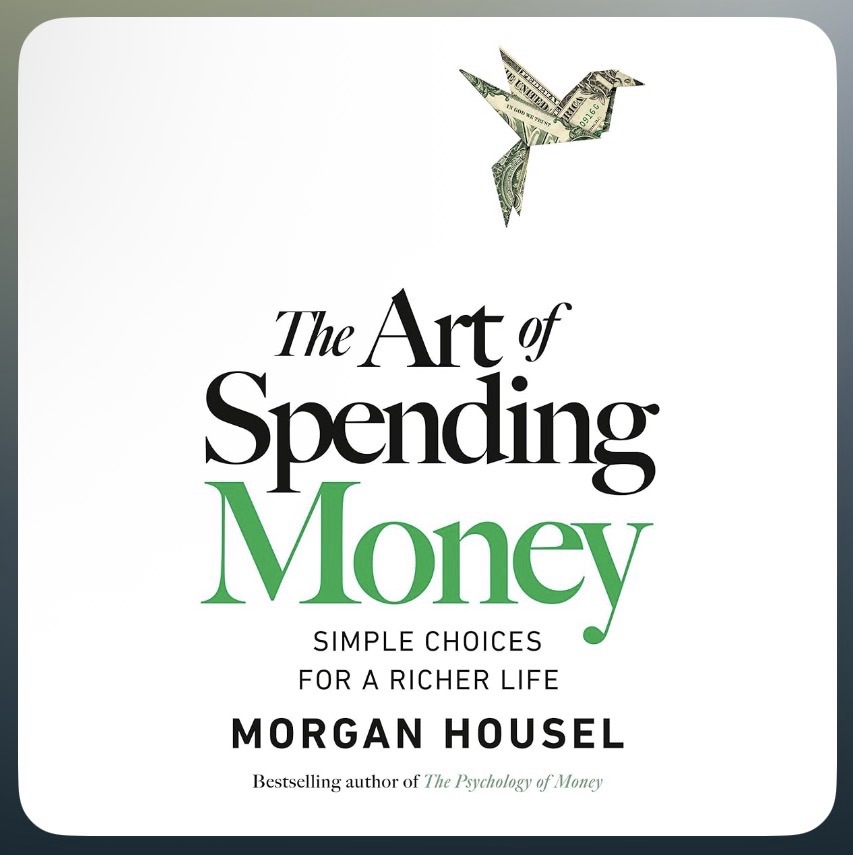
Book notes: Star Wars: Tempest Runner (The High Republic) by Cavan Scott

Star Wars: Tempest Runner (The High Republic) by Cavan Scott — book summary, review and key ideas.

Star Wars: Tempest Runner (The High Republic) by Cavan Scott — book summary, review and key ideas.

Get the audiobook on Audible 👇 (affiliate link)

Star Wars: Tempest Runner (The High Republic) by Cavan Scott

Date read / Format:

April 2026 | Audiobook


Synopsis:

“After the Battle of Kur, Lourna Dee — Tempest Runner of the Nihil — has escaped capture by faking her own death. But she doesn’t stay free for long. Taken aboard the Republic prison ship Restitution under an assumed identity, Lourna must keep her true nature hidden while navigating a world of prisoners, guards, and ghosts from her past.

But the Nihil haven’t forgotten her — and neither have her enemies. When the past catches up, Lourna must decide once and for all who she really is.” -Amazon

Note: This is a full-cast audio drama/audio original, not a traditional audiobook narration.


~If you enjoy my summary, please consider buying me a coffee via my Ko-Fi link (click the button below) or support this blog in one of several ways! 📖 🎓

I appreciate every donation as it goes directly to the maintenance costs of my blog and creation of new content. 😊
Buy Me a Coffee at ko-fi.com
Continue reading “Book notes: Star Wars: Tempest Runner (The High Republic) by Cavan Scott”

Book notes: The Hero of Ages by Brandon Sanderson

The Hero of Ages, Mistborn book 3 by Brandon Sanderson — book summary, review and key ideas.

The Hero of Ages, Mistborn book 3 by Brandon Sanderson — book summary, review and key ideas.

Get the audiobook on Audible 👇 (affiliate link)

The Hero of Ages: Mistborn, Book 3 by Brandon Sanderson

Date read / Format:

March 2026 | Audiobook


Synopsis:

“Tricked into releasing the evil spirit Ruin while attempting to close the Well of Ascension, new emperor Elend Venture and his wife Vin are now on the defensive. Ash chokes the sky, the mists kill those who venture outside, and koloss armies rampage unchecked. Ruin grows stronger with each passing day as it works to reclaim its body and fulfill its ultimate purpose — the destruction of the world.

Vin and Elend must uncover the secrets the Lord Ruler left behind: hidden stashes of supplies, encoded prophecies, and the truth about the Hero of Ages. But the answers are darker than anyone imagined, and the cost of saving the world may be higher than anyone is willing to pay.” -Amazon


~If you enjoy my summary, please consider buying me a coffee via my Ko-Fi link (click the button below) or support this blog in one of several ways! 📖 🎓

I appreciate every donation as it goes directly to the maintenance costs of my blog and creation of new content. 😊

Buy Me a Coffee at ko-fi.com Continue reading “Book notes: The Hero of Ages by Brandon Sanderson”

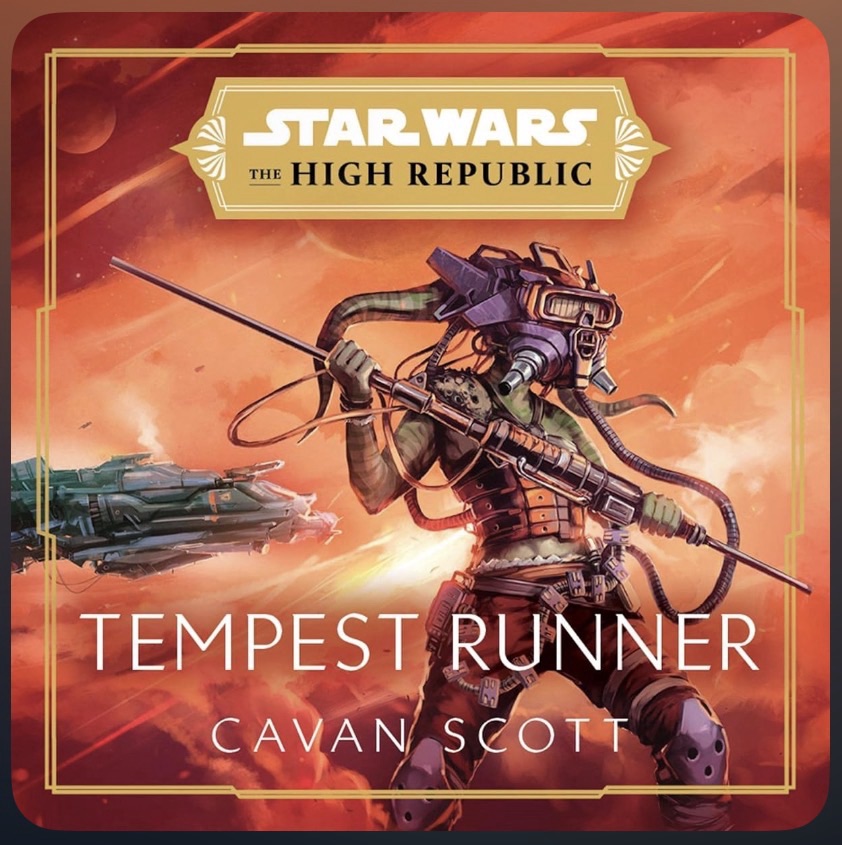
Book notes: Star Wars: The Rising Storm (The High Republic) by Cavan Scott

Star Wars: The Rising Storm by Cavan Scott — the second High Republic adult novel delivers a breathtaking Republic Fair attack sequence and exceptional Jedi character work. Book notes, key ideas, and personal review.

Get the audiobook on Audible 👇 (affiliate link)

Star Wars: The Rising Storm (The High Republic) by Cavan Scott

Star Wars: The Rising Storm (The High Republic) by Cavan Scott

Date read / Format:

March 2026 | Audiobook


Synopsis:

The Rising Storm is the second adult novel in the High Republic era, picking up where Light of the Jedi left off. Set at Chancellor Lina Soh’s ambitious Republic Fair on the planet Valo — a grand celebration of galactic unity — the novel follows Jedi Masters Stellan Gios and Elzar Mann, Padawan Bell Zettifar, and former Jedi Ty Yorrick as a devastating Nihil surprise attack turns the celebration into a battleground. As the Jedi fight to protect thousands of innocents, Marchion Ro unleashes an ancient threat that could change the course of the conflict forever.

~If you enjoy my summary, please consider buying me a coffee via my Ko-Fi link (click the button below) or support this blog in one of several ways! 📖 🎓

I appreciate every donation as it goes directly to the maintenance costs of my blog and creation of new content. 😊
Buy Me a Coffee at ko-fi.com Continue reading “Book notes: Star Wars: The Rising Storm (The High Republic) by Cavan Scott”

Book notes: 107 Days by Kamala Harris

107 Days by Kamala Harris — a candid firsthand account of her historic 107-day presidential campaign, from Joe Biden’s unexpected withdrawal to Election Night. Book notes, key ideas, and my personal review.

Get the audiobook on Audible 👇 (affiliate link)

107 Days by Kamala Harris

107 Days by Kamala Harris

Date read / Format:

February 2026 | Audiobook


Synopsis:

107 Days is Kamala Harris’s firsthand account of her historic 107-day presidential campaign — from the moment Joe Biden stepped aside on July 21, 2024, to Election Day on November 5. Drawing on personal journals, conversations with her inner circle, and her own memories, Harris pulls back the curtain on VP selection, debate preparation, intra-party tensions, and the deeply personal moments that defined her run as the first woman of color to lead a major party presidential ticket

~If you enjoy my summary, please consider buying me a coffee via my Ko-Fi link (click the button below) or support this blog in one of several ways! 📖 🎓

I appreciate every donation as it goes directly to the maintenance costs of my blog and creation of new content. 😊

Buy Me a Coffee at ko-fi.com Continue reading “Book notes: 107 Days by Kamala Harris”

Book notes: Light of the Jedi by Charles Soule

Light of the Jedi by Charles Soule — the thrilling launch of the Star Wars High Republic era, where Jedi heroes rise to face a galaxy-wide catastrophe and a ruthless new enemy unlike any they’ve encountered before. Book notes, key ideas, and my personal review.

Get the audiobook on Audible 👇 (affiliate link)

Light of the Jedi (Star Wars: The High Republic) by Charles Soule

Light of the Jedi by Charles Soule

Date read / Format:

February 2026 | Audiobook


Synopsis:

“Long before the events of The Phantom Menace, the galaxy is enjoying a golden era of peace and prosperity under the High Republic. The Republic has spread to the Outer Rim, the Jedi are at the height of their power, and the newly completed hyperspace lanes allow civilizations to connect like never before. It is a hopeful time — but hope is fragile.

When a passenger freighter called the Legacy Run is destroyed in hyperspace, its debris scatters across multiple systems in the Outer Rim, threatening billions of lives. As the Jedi race to contain the disaster, a ruthless and enigmatic new villain emerges from the shadows — and a terrifying enemy unlike anything the Republic has faced before: the Nihil.” -Audible

~If you enjoy my summary, please consider buying me a coffee via my Ko-Fi link (click the button below) or support this blog in one of several ways! 📖 🎓

I appreciate every donation as it goes directly to the maintenance costs of my blog and creation of new content. 😊

Buy Me a Coffee at ko-fi.com Continue reading “Book notes: Light of the Jedi by Charles Soule”

What Does Your Ideal Partner Actually Look Like? (I Asked AI and It Got Uncomfortably Accurate)

I asked Claude to synthesize my ideal romantic partner based on my personality frameworks, relationship history, and life vision. Here’s what it came up with — and a prompt you can use to run the same exercise yourself.

Personal development · Relationships · AI tools


I’ve been on a bit of an AI rabbit hole lately.

It started with me using Claude to help build out a full personal profile of myself — 100 interview-style questions, synthesized into a written document. From there I went deep on shadow work, emotional pattern analysis, and a reflection on my dance team family. I wrote about the whole experience in a previous post (What Happens When You Let AI Interview You for Two Days) if you want the full backstory.

At some point during all of that, I thought: if Claude knows me this well at this point, can it synthesize what my ideal romantic partner actually looks like?

Spoiler: Yes. And it was more useful than I expected.

This post is two things: a reflection on that experience, and a reusable prompt you can run yourself to get the same output. Whether you’re single, dating, or trying to get clearer on what you need in your current relationship — this exercise is worth the 20–30 minutes.

Continue reading “What Does Your Ideal Partner Actually Look Like? (I Asked AI and It Got Uncomfortably Accurate)”

Book notes: $100M Offers by Alex Hormozi

$100M Offers by Alex Hormozi — a no-fluff, tactical playbook for crafting an irresistible ‘Grand Slam Offer’ that commands premium prices and makes your ideal client feel foolish saying no. Book notes, key ideas, and my personal review.

Get the audiobook on Audible 👇 (affiliate link)

$100M Offers: How to Make Offers So Good People Feel Stupid Saying No by Alex Hormozi

Screenshot

Date read / Format:

January 2026 | Audiobook


Synopsis:

I took home more in a year than the CEOs of McDonald’s, IKEA, Ford, Motorola, and Yahoo combined as a kid in my 20s using the $100M Offers method. It works. And it will work for you.

Not that long ago, though, my business had gotten so bad that I literally couldn’t even give my services away for free. At the end of each month, I would look at my bank account hoping to see progress (but there wasn’t). I knew something had to change…but what?

Over the next 48 months, I went from losing money to making $36 for every $1 spent. In that time period, we generated over $120,000,000 across four different industries: service, ecommerce, software, and brick and mortar.

But, unlike everyone else, we didn’t have great funnels, great ads, or a wealthy niche. In fact, we didn’t even send emails until we had crossed $50M in sales. Instead, we were able to do this one thing really well: We created offers so good, people felt stupid saying no.

Here’s exactly what this book will show you how to do:

  • How to charge a lot more than you currently are
  • The tiny market, big money process we use to laser focus on niche markets overflowing with cash
  • The “unfair” pricing formula: How we multiplied our pricing by 100 (and got more people to say yes…for real)
  • The value flip…so you never get price compared again (That’s a promise.)
  • The virtuous cycle of price: Use it to outspend your competition (for good) while using your product to attract the best talent.
  • How to make your product so good, prospects find a way to pay for it
  • The unbeatable value equation: to make what you sell worth more than your prospects have ever received
  • The delivery cube: to make delivering your products and services cost less but provide more
  • The trim and stack hack: to maximize profit using the absolute best delivery methods. (This has never been shared publicly and was how we made $17m in profit on $28m in revenue in a year when I was 28 years old)
  • How to enhance your offer so much, prospects buy without hesitating
  • The scarcity stack: How to use the three different types of scarcity in every offer you make (without lying) to get people to buy the moment you ask
  • The “everyday” urgency blueprint: to get prospects to buy right now, using everyday life to create real, ethical time pressure
  • Unbeatable bonuses…and watch your prospects’ hesitations melt away as they begin reading their credit cards to you before you even finish!
  • God-mode guarantees: So good they make anyone say yes (even people who would never normally consider buying). I’ll show you how to stack and layer all four types of guarantees together. I even give you my 13 favorite guarantees word-for-word to swipe for yourself.
  • Magic naming formula to get the absolute highest response rates and conversion rates from everything you do to get new clients
  • And so much more

The methods contained within this book are so simple, so instantaneous, and so effective, it’s as if they work by magic. If you implement even one tactic in this book, you’ll see the change in your prospects’ demeanor. And you’ll know the $100M Offers method worked when you start hearing, “What do I need to do to move forward?” before you even ask for the sale.” -Audible


~If you enjoy my summary, please consider buying me a coffee via my Ko-Fi link (click the button below) or support this blog in one of several ways! 📖 🎓

I appreciate every donation as it goes directly to the maintenance costs of my blog and creation of new content. 😊

Buy Me a Coffee at ko-fi.com Continue reading “Book notes: $100M Offers by Alex Hormozi”