The Happiness Files: Insights on Work and Life by Arthur C. Brooks book summary review and key ideas.
Get the audiobook on Audible 👇 (affiliate link)
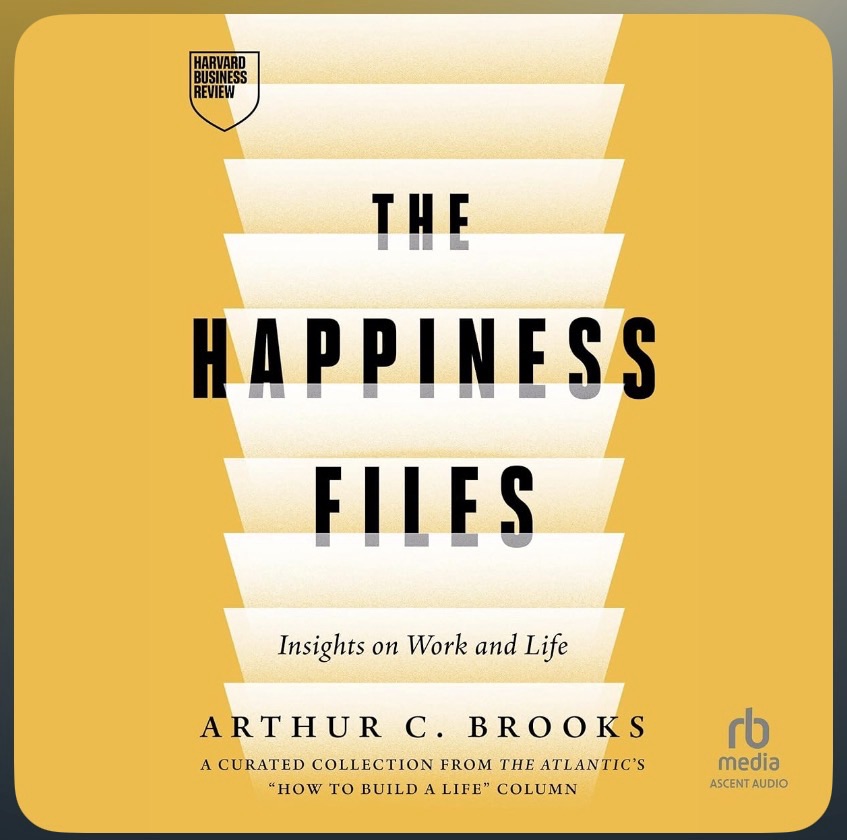
The Happiness Files: Insights on Work and Life by Arthur C. Brooks
Date read / Format:
May 2026 | Audiobook
Synopsis:
“Imagine if your life were a startup. How would you lead it and shape it to be most successful? That’s the question behind The Happiness Files, a rich selection of enlightening and instructive essays by Arthur C. Brooks, known worldwide for his inspiring yet practical wisdom and advice in his weekly column for The Atlantic and in his bestselling books, From Strength to Strength and Build the Life You Want (coauthored with Oprah Winfrey).
Building on his popular Harvard Business School course “Leadership and Happiness,” Brooks begins each essay with sharp observations and behavioral science research that shed light on how happiness really works, then offers experiential wisdom and practical advice. Beautifully written, the essays range from ancient philosophy to literature, pop culture, and the contemporary world of work.
The simple answer, as Brooks wisely explains, is to manage your life in a way that leads to truly valuable rewards: love, enjoyment, satisfaction, and meaning—in other words, happiness.” —Audible
~If you enjoy my summary, please consider buying me a coffee via my Ko-Fi link (click the button below) or support this blog in one of several ways! 📖 🎓
I appreciate every donation as it goes directly to the maintenance costs of my blog and creation of new content. 😊

Opening thoughts:
I have already read one of Arthur C. Brooks’ other books, Build the Life You Want, and had recently heard him on the Tim Ferriss Show, which inspired me to pick up another one of his books.
Also, I think reading and sharing book notes on happiness is always a worthwhile endeavor — seeking happiness is one of, if not the main thing, we all have in common. So, reading this book would be helpful to me and to anyone who reads my notes.
Key notes:
Introduction: Happiness and Your Start-up Life
- Your life is the most important management task you will ever undertake
- If you treat your life like you’re a great CEO, founder, or owner of an exciting and successful startup enterprise, you’ll be much happier, more meaningful, and more successful
- The returns on life come from the strength of your intimate ties
Part One: On Managing Yourself
Chapter 1: How to Succeed at Failure: Sometimes you just can’t win. Make the most of it
- Analyzing your failures helps them not feel as big
- Failures are also a powerful force in self-improvement
Chapter 2: Stop Spending Time on Things You Hate: Your time on Earth is precious and limited. Here’s how to waste it
- Our job should be to manage our days in accordance with priorities
- Tip: be proactive and schedule your downtime
- Tip: give your bad habits a monetary value
Chapter 3: Feeling Burned Out? Here’s What to Do: The way to break the cycle is by creating meaningful boundaries between work and life
- If you feel burnout, it’s best to withdraw and restore yourself
Chapter 4: Procrastinate This, Not That: Do your chores now. Put the creative work off for a day
- Procrastination can be thought of as a form of emotion management
Chapter 5: Overwhelmed? Just Say “No”: The science of how to stop saying “yes” to everything
Chapter 6: How to Worry Less and Be Happier: Start by simply writing down what’s bothering you
- Rumination is about the past; worrying is about the future
- Research suggests that worriers believe that if they think about something enough, they might be able to avoid it
- There is a correlation between worry and high performance, but usually only with unusual levels of ability
- Studies show that 90% of things chronic worriers worry about never come to fruition — so for every 1 bad thing that happens, they suffer for 10
- Anxiety, of which worry is a component, is simply unfocused fear
- Focus on outcomes, not problems
Chapter 7: Why a Bit of Restraint Can Do You a Lot of Good: If authenticity leads to acting out, it won’t bring you happiness
- Seeking the short-term mood payoff from relaxing our inhibitions usually correlates to less ideal long-term outcomes
- More self-restraint can lead to greater happiness and personal well-being
Chapter 8: Your Money Worries Might Be Hiding Something Deeper: Once you’ve met your basic needs, riches won’t help you feel better about yourself
- Basing your self-image on your bank account can lead to unhappiness
- Giving your money away to causes that are meaningful to you is a good way to reframe money as a means to make the world better
Part Two: On Jobs, Money, and Building Your Career
Chapter 9: The Happiest Way to Change Jobs: How to rock your work rather than let the work rule you
- Coach yourself to have realistic expectations in the workforce — don’t romanticize or you’ll set yourself up for more unhappiness
- Look for happiness outside of work first — the biggest predictor of work happiness is non-work happiness
Chapter 10: Why You Should Trust Your Gut: Careful, deliberate reasoning can get you only so far in good decision-making
- Nothing in life is certain, but your gut and your heart can help steer you in the right direction
Chapter 11: Give Your Money. Give Your Time. Don’t Tell Anyone: You can find deep, lasting happiness in a good deed that no one knows you did
- Private and anonymous giving brings more happiness than public giving
- Self-expression is a driver of happiness
Chapter 12: How to Buy Happiness: The way you spend your money makes all the difference to your well-being
- Studies show that after a certain income level, more money doesn’t have a significant effect on our happiness — and spending more time earning more money will likely detract from the things that actually give us happiness, such as building and deepening our relationships
- Research shows that spending money on experiences, buying time, and giving money away to help others all reliably raise happiness
- Having fun experiences with our loved ones checks multiple boxes
Reader’s note: This chapter directly mirrors the main ideas covered in The Art of Spending Money by Morgan Housel. Highly recommend reading that book as it discusses the way to use money to improve your happiness and quality of life.
Chapter 13: The Two Choices That Keep a Midlife Crisis at Bay: Middle age is an opportunity to find transcendence
- 1st decision: choose to focus on what age gives you, not what it has taken away
- 2nd decision: choose subtraction, not addition
- New abilities that naturally develop after age 40: the growing ability to see patterns clearly, connect ideas, and explain complex concepts — what psychologists call crystallized intelligence
- Your medium of life should change from a canvas to a sculpture — in which the work of art appears from chipping away, not adding
Chapter 14: Schopenhauer’s Advice on How to Achieve Great Things: Three rules that can supercharge your effort, inspired by the 19th-century philosopher
- Keeping the big picture in view enhances success in any task that takes significant time and effort, and helps maintain motivation
- Mindfulness helps you avoid procrastination and become more productive
- Advice: keep the grand plan in mind
- Advice: live in day-tight compartments
- Advice: block out the noise
Part Three: On Communicating and Connecting with Others
Chapter 15: How to Take—and Give—Criticism Well: Bad reviews feel terrible, but accepting (and using) them will lighten your load
- Depersonalize criticism and treat it as insider information
- Make feedback a gift, never a weapon
- Praise in public, criticize in private
Chapter 16: How to Give a Great Compliment: Beware of pro forma praise—and recognize true acts of kindness instead
- Research shows that the highest-performing teams have a high 5:1 compliment-to-criticism ratio
- Whether a compliment effectively uplifts the other person depends on whether it is believable, appropriate, and unqualified — and it should not clash with the recipient’s self-conception
- Be honest — compliments are received best when sincere
- Make your compliment a pure gift and avoid qualification
- One thing people rarely compliment but should is what psychologists call moral beauty — a characteristic reflected in acts of kindness, charity, compassion, forgiveness, courage, or self-sacrifice
Chapter 17: Meetings Are Miserable: One of the most straightforward paths to happiness is fighting the meeting scourge
- Eliminating meetings — or at least minimizing them — is the most straightforward way to increase well-being in the workplace
- Make meetings more efficient by keeping them tightly focused and limiting them to 30 minutes or less
Chapter 18: The Trouble with Zooming Forever: It may be convenient, but it will never make us as happy as real human interaction
- We should think of virtual social interaction as non-nutritious food — good in a pinch, but not something to rely on for regular social sustenance, because it will hurt our health
Chapter 19: The Case for Mindful Cursing: Swearing can make you happier, as long as you do it for the right reasons
- Research suggests that swearing is associated with less lying and deception, and can provide some measure of emotional relief
- Do it on purpose and with clear intention — but not uncontrollably or simply out of habit
- Ration your curses and make their use rare
- Never use swearing to abuse or harass
Chapter 20: How to Speak Truth Without Fear: And avoid alienating everyone you know
- While physical courage is common, moral courage is rare — however, it is a skill that can be developed
Part Four: On Balancing Work, Life, and Relationships
Chapter 21: Jung’s Five Pillars of a Good Life: The great Swiss psychoanalyst left us a surprisingly practical guide to being happier
Carl Jung believed that making progress towards happiness was built on five pillars:
- Good physical and mental health
- Good personal and intimate relations, such as those of marriage, family, and friendships — research unequivocally shows that good relationships keep us happier and healthier
- Seeing beauty in art and nature
- A reasonable standard of living and satisfactory work
- The upgrade to meaningful work comes from two elements: earned success (a sense of accomplishing something valuable) and service to others
- A philosophical or religious outlook that fosters resilience
Chapter 22: How to Influence People—and Make Friends: The key to persuasion is listening sincerely to what people have to say
- Use your views and values as a gift, not a weapon
- Focus on what we agree on
- Stop talking and listen
- Refuse to be used
Chapter 23: Why You Should Stop Worrying About Your Parenting: You have less effect on them than you think—but your love will make them happy
- Parenting involves both words and actions
- Even a hot mess can be a good parent
- When you don’t know what to do, be warm and loving
- Be the person you want your kids to become
Chapter 24: How to Know Your Frenemy: That person who poses as your ally but isn’t? They make you sick, literally
- Frenemies are worse for your health than outright foes
Chapter 25: Don’t Be Deceived by First Impressions: We need to move beyond our evolutionary tendency to form snap judgments
- Being and appearing happy makes people quickly assess you in a more favorable way
Chapter 26: What to Do If the Course of True Love Is Not Running Smoothly: Be prepared for failure, and learn from it, to realize ultimate bliss
- Painful breakups are important for learning
- In matters of the heart, lasting friendship trumps fleeting passion
Chapter 27: 10 Practical Ways to Improve Happiness: You need advice that goes beyond “Be Danish.”
- Invest in family and friends — share experiences and free up time to spend together
- Join a club and invest the time in building social capital to protect against loneliness and isolation
- Be active, both mentally and physically — try to walk for an hour and read for an hour each day
- Practice your religion or faith — or more broadly, search for transcendent truth beyond your narrow day-to-day life
- Get physical exercise — supplement your daily walk with a purposive exercise plan, as it enhances mood and social functioning
- Act nicely — agreeableness is consistently found to be highly and positively correlated with happiness, and it can be increased relatively easily
- Be generous — behaving altruistically towards others rewards the brain with happiness, enhancing boosts of dopamine, serotonin, and oxytocin
- Check your health — chronic pain and anxiety are some of the most common factors for unhappiness
- Experience nature — walking in a woodland setting dramatically lowers stress, increases positive mood, and enhances working memory
- Socialize with colleagues outside of work — work friendships increase employee engagement, which is associated with both happiness and productivity
Part Five: On How You Define Success
Chapter 28: Why Success Can Feel So Bitter: Achieving a goal and achieving happiness are entirely different
- Progress towards a meaningful goal brings more happiness than actually meeting the goal
- Ask yourself: are you enjoying the journey?
- The point of a good goal is to improve your quality of life by changing your day-to-day for the better
- Researchers have found that frequent small achievements tend to start a cycle of success and happiness more than infrequent big ones
Chapter 29: Why You Might Want to Toss Out Your Trophies: Are your mementos of personal triumph making you feel like a has-been?
- One happiness habit: keep a journal of happy memories — fun days with loved ones, moments of peace and tranquility — and turn to it when you need it
- Commemorate what matters
Chapter 30: The Magic of a Little Danger: To get happier, be brave—not reckless
- Find your “bulls to run with” — something potentially terrifying and challenging, but also invigorating
- Envision bravery, but not recklessness
- Make a sensible plan and follow it
- Research shows that impulsivity and happiness are largely incompatible
Chapter 31: How Smart People Can Stop Being Miserable: Intelligence can make you happier, but only if you see it as more than a tool to get ahead
- There is no correlation between general intelligence and life satisfaction at the individual level
- Give your ideas away and share your secrets to success
- Use your wit and intelligence to uplift others or make them laugh without tearing anyone down
Chapter 32: Think Twice Before Taking the Top Job: Getting the corner office might mean sacrificing a little happiness
- Leaders fail when they hate being the leader
- Some people should avoid leadership, especially if they struggle with loneliness and anger
- Don’t take the top job unless you’re willing to take a temporary hit to your happiness
Chapter 33: If You Want Success, Pursue Happiness: Chasing achievement to get happier is a fool’s errand; start with happiness instead
- Work on your happiness first, and then success will likely follow — studies show that these are both highly positively correlated
- The most meaningful jobs tend to be the most service-oriented
Closing thoughts:
Loved this book — it delivered exactly what I was expecting. As I noted in the beginning, practical insights on happiness that we can readily implement in our own lives are extremely valuable and relevant to pretty much everyone.
I think this is a book (or at least a summary) that is worth revisiting every so often, especially as we all struggle with our happiness at different points in our lives, if not for most of our lives, if we’re not intentional about or if we’re focusing on the wrong things for too long.
One Takeaway / Putting into practice:
This entire book is packed with so many good takeaways, any one of them from any chapter could significantly improve the happiness in one’s own life.
If I had to pick one takeaway for myself, it would be this:
Enjoy the journey: Progress towards a meaningful goal brings more happiness than actually meeting the goal. Ask yourself: are you enjoying the journey? The point of a good goal is to improve your quality of life by changing your day-to-day for the better — not just to cross the finish line
As the author also says, the fastest path to success is to pursue meaningful happiness. For me, I want to try to keep the big picture of my life vision in mind and focus on the goals, activities, and relationships that contribute to that vision.
Nutshell:
A curated collection of Arthur C. Brooks’ best work from his How to Build a Life column in The Atlantic, distilling behavioral science research into practical, actionable insights across every dimension of work and life. If you treat your life like a well-run startup — managing your days with intention, investing in the right relationships, and defining success on your own terms — happiness isn’t something you chase, it’s something you build.
Similar books:
- Build the Life You Want by Arthur C. Brooks & Oprah Winfrey
- Solve for Happy by Mo Gawdat
- 10% Happier by Dan Harris
- Think Like a Monk by Jay Shetty
- Wherever You Go, There You Are by Jon Kabat-Zinn
Rating:
4.5/5
Subscribe for More Summaries👇
Try Audible for audiobooks 📚🎧
Personal recommendation: For the last 10+ years, I’ve used Audible to listen to all of my favorite books. It’s easy to use, cost-effective, and they have the best library of audiobooks.
If you use my affiliate links below, not only will you get a special offer, but it’ll help support the costs to maintain this blog! 😊👇
Try Audible and Get Two Free Audiobooks

Please donate! 🙂
Please consider a small donation to help support my blog ^_^ I love providing free book notes and other content. Any donations help me maintain my website and create content consistently. Thanks everyone for the continued support!
$2.00
Discover more from Marlo Yonocruz
Subscribe to get the latest posts sent to your email.

A thoughtful and valuable collection of ideas. What particularly stands out to me is the distinction between achieving a goal and actually building a meaningful life along the way.
Success can be measured by titles, achievements, or milestones, but happiness is often shaped by things that are much less visible: meaningful relationships, service to others, personal growth, resilience, and the ability to appreciate the journey rather than constantly waiting for the next destination.
The idea that progress toward a meaningful goal can be more rewarding than simply reaching the finish line is especially important. Perhaps a good life is not about finally arriving somewhere, but about becoming someone we can respect while we are still on the way.
Thank you for bringing these ideas together in such a practical and accessible way.
— Wahidullah Noorzai | Former Senior ANP/ANCOP Officer, Strategic & Security Analyst
LikeLike