Get the audiobook on Audible 👇 (affiliate link)
A Million Miles in a Thousand Years: What I Learned While Editing My Life by Author
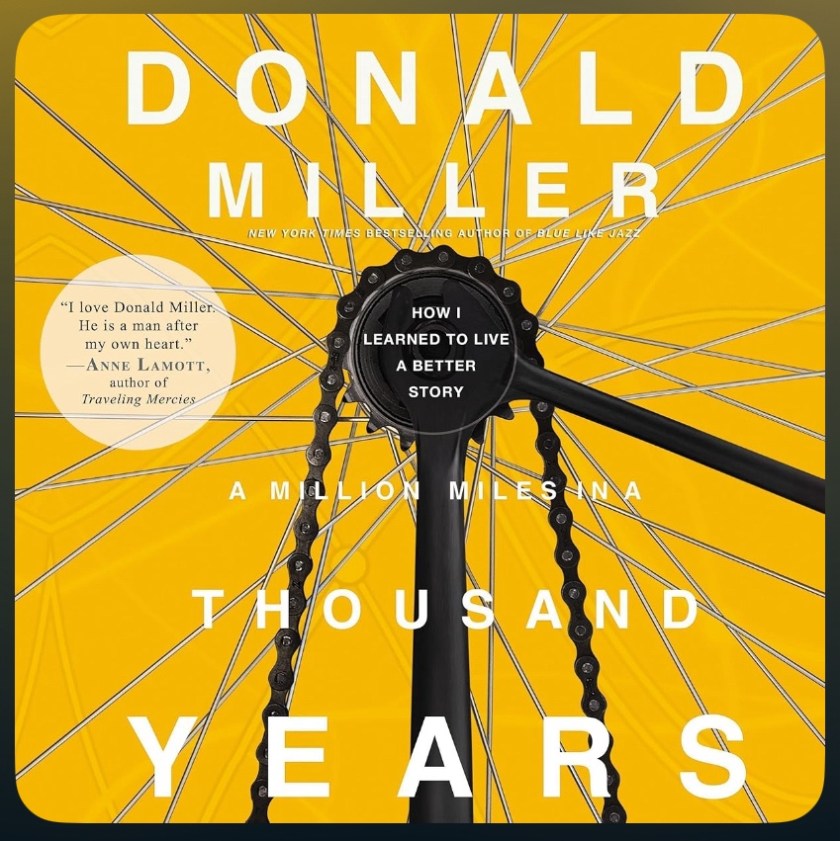
Synopsis:
“Full of beautiful, heart-wrenching, and hilarious stories, A Million Miles in a Thousand Years details one man’s opportunity to edit his life as if her were a character in a movie. Years after writing his best-selling memoir, Donald Miller went into a funk and spent months sleeping in and avoiding his publisher. One story had ended, and Don was unsure how to start another. But he gets rescued by two movie producers who want to make a movie based on his memoir. When they start fictionalizing Don’s life for film – changing a meandering memoir into a structured narrative – the real-life Don starts a journey to edit his actual life into a better story.
A Million Miles in a Thousand Years details that journey and challenges listeners to reconsider what they strive for in life. It shows how to get a second chance at life the first time around.” -Audible
~If you enjoy my summary, please consider buying me a coffee via my Ko-Fi link (click the button below) or support this blog in one of several ways! 📖 🎓
I appreciate every donation as it goes directly to the maintenance costs of my blog and creation of new content. 😊

Opening thoughts:
I believe I found this book through Audible recommendations. It seemed like a good mix between personal development and biography/narrative, so hopefully it wouldn’t be one of those books that inundates me with too many insightful points. I think recently, information-heavy self-help books have been more daunting and discouraging to read for me because I don’t have a lot of free time to listen and take notes on all these non-fiction books. Plus it makes writing down my book notes exponentially longer when I have to go through a lot more notes.
Key notes:
Part One: Exposition
Chapter 1: Random Scenes
- Life is slow and not a lot of interesting or memorable stuff happens during most of it
- We don’t remember most of what happens in a vast majority of our lives
- The thing about trying to remember your life is you start to wonder what everything means
- “A good story is just life condensed to its most memorable parts”
Chapter 2: It’s Improv
Chapter 3: A Million Miles and a Thousand Years
Chapter 4: It’s All About Story
- They explained to him that they needed to rewrite his book into a narrative arc that would translate and make sense for a movie audience
Chapter 5: Your Real Life is Boring
- Steve said the story was the most important part of the movie, which took a lot of effort that nobody sees
- Music obeys principles in order for the sounds to be music
- Just like how in stories, if you don’t obey certain principles, the story doesn’t make sense
- All the experience become random
- Without the principles of story, life is just random experiences
Chapter 6: Flesh and Soul Better
- He thinks we are all born happy and then we become displeased
Chapter 7: My Uncle’s Funeral and a Wedding
Chapter 8: Going to See the Guru
Chapter 9: The Basic Elements of a Meaningful Life
- The essence of a story is a character that wants something and overcomes conflict to get it
Chapter 10: How Jason Saved His Family
- Jason gave his family a new story/narrative where they committed to building an orphanage together, it it brought them closer and united toward a goal
Part Two: A Character
Chapter 11: Writing the World
- He hopes that God wrote us specifically into the story with the intent to say “Enjoy your place in my story, the very beauty of it means it’s not about you. And in time, that will give you comfort”
Chapter 12: Imperfect is Perfect
- If the point of life is the same as the point of a story, the point of life is character transformation
Chapter 13: The Point of a Story is the Transformation of the Characters
- An art student wondered if the point of life wasn’t the search of finding meaning, but the transformation that the search creates
- The point of a story is the character arc, the change
Chapter 14: Story Application and Leadership
Chapter 15: A Character is What They Do
- A character in a movie is what they do
- In a book, you can let the reader into a person’s head, but you can’t for a movie
- Life works like a movie: people follow your actions and what you do
- The stories we tell ourselves are different from the stories we tell the world
Chapter 16: A Character Must Save the Cat
- The main character needs to do good in the beginning so that people know they have a good heart and will care about them and root for them later on
Chapter 17: A Good Character Listens to Their Writer
- When you listen to the inner writer and become a better character, the story gets better too
Chapter 18: Something on the Page
Part Three: A Character Who Wants Something
Chapter 19: How to Make Yourself Write a Better Story
- Characters do not want to change, they must be forced to change
- Humans naturally seek comfort and stability
Chapter 20: An Inciting Incident
- The greatest stories go to those who don’t give in to fear
- The most often repeated commandment in the Bible is “do not fear”
- An inciting incident is a doorway through which a protagonist cannot return
Chapter 21: Pointing Toward the Horizon
- You don’t realize a story is changing you until you look back
Chapter 22: Negative Turns
- Book reference: The War of Art by Steven Pressfield
- When we feel that resistance to a direction we’re going, that’s usually a sign we’re doing the right thing
- The world needs for us to have courage and to write a better story
Chapter 23: A Good Story Hijacked
- After reading a lot of marketing books, he learned it was a 3 step process:
- Convince people they are miserable
- Convince people they will be happy if they buy your product
- Include a half-naked woman in your pitch
- Marketing is essentially a manipulation of the elements of a story
- He learned that money can buy happiness, as long as you use the money to fund the right stories that bring you joy
Chapter 24: A Practice Story
Chapter 25: A Positive Turn
Reader’s note: This recollection of him meeting his father is painful. I can’t relate, and as a reader, I want to yell at him for being so closed off and not even making an effort to connect with his father.
Chapter 26: Meeting Bob
- One element that takes a story to the next level and makes it epic is a difficult, almost impossible ambition
- This usually entails higher risk which is more interesting
- The second element is that the ambition has to be sacrificial
- The protagonist has to be going through all that trouble and risking their very life for someone else
- Life can be magical and special only if we’re willing to take a few risks
Chapter 27: A Better Story, An Epic, An Absurd Idea
Part Four: A Character Who Wants Something and Overcomes Conflict
Chapter 28: The Thing About a Crossing
- Conflict is what’s needed to change a person
- Joy is what they might feel afterward but they need the conflict and change
- The first and third acts are short. But the second is long and difficult and is where the character arc happens
Chapter 29: It’s the Pain that Binds Us
Chapter 30: A Tree and a Story About a Forest
- Things or other characters only make sense in the context of a story
- He thinks after a tragedy, God gives us a period of numbing as a kind of grace
- Book reference: Man’s Search for Meaning by Viktor Frankl
- Fulfillment in life, meaning, and joy do not have to be connected to any worldly comfort but can come from a greater understanding of our spiritual reality
- Spirituality makes the most sense when we are actively working through something, a conflict, toward a greater purpose
- It’s the conflict that transforms us
Chapter 31: The Reason God Hasn’t Fixed You Yet
Chapter 32: Great Stories Have Memorable Scenes
Part Five: A Character Who Wants Something and Overcomes Conflict to Get It
Chapter 33: Squeezing a Cat
Chapter 34: The Beauty of a Tragedy
- We don’t know how much we’re capable of loving until the people we love are being taken away, until a beautiful story is ending
Chapter 35: All You Have to Do is Try
- It wasn’t necessary to win for the story to be great, it’s only necessary to sacrifice everything
Chapter 36: To Speak Something Into Nothing
- Nobody gets to watch the parade, they can only participate
Chapter 37: Summer Snow in Delaware
Chapter 38: Telling a Story Demands Courage
Reader’s note: He’s explaining how he’s a bit envious of the simplistic thinking of animals, or pre-fall humans
- If we want a feeling of meaning in life, we don’t have a choice but to live a good story
- To propel ourselves into some noble adventure, enduring difficult conflict for a cause greater than ourselves so we can see a tension resolve for the betterment of the people around us, for our family and friends and strangers less fortunate, thus setting a moral compass for everybody watching our stories, giving them the inspiration to live a better life themselves
Closing thoughts:
This was a solid book that fulfilled my expectations. I think it was a great story about this author turning his life into a movie, but discovered how doing so was a parallel to how to life a fulfilling life that improves the world around us. There were a ton of good insights, and it wasn’t hard to follow along like many dense, nonfiction books because the lessons were sprinkled throughout the story.
I would say this is another favorite book for me this past year, and I would highly recommend for anyone who wants a more non-traditional self-improvement book.
One Takeaway / Putting into practice:
There are a lot of good takeaways and lessons from this book. The one I choose for myself would be:
- Life works like a movie: people follow your actions and what you do
I think this is a solid one takeaway because action is always important. It’s not enough to just think positive thoughts and believe that we’re reconditioning the mental scripts in our heads. We have to actually take action. That action is what other people follow and see. Action is what inspires other people to take action and improve their own lives as they seek fulfillment. Action always trumps words.
Nutshell:
After reviewing his own life, Donald Miller gives us insights into how writing a great story for a movie gives a great parallel for creating a great life, inspiring others, and creating a better world for the people around us.
Similar books:
- The Ride of a Lifetime by Robert Iger
- The Alchemist by Paulo Coelho
- Greenlights by Matthew McConaughey
- The Last Lecture by Randy Pausch
- The Comfort Crisis by Michael Easter
- Be Useful by Arnold Schwarzenegger
- Girl, Wash Your Face by Rachel Hollis
- Endure by Cameron Hanes
Rating:
4/5
Subscribe for More Summaries👇
Try Audible for audiobooks 📚🎧
Personal recommendation: For the last 10 years, I’ve used Audible to listen to all of my favorite books. It’s easy to use, cost-effective, and they have the best library of audiobooks.
If you use my affiliate links below, not only will you get a special offer, but it’ll help support the costs to maintain this blog! 😊👇
Try Audible and Get Two Free Audiobooks

Please donate! 🙂
Please consider a small donation to help support my blog ^_^ I love providing free book notes and other content. Any donations help me maintain my website and create content consistently. Thanks everyone for the continued support!
$2.00
Discover more from Marlo Yonocruz
Subscribe to get the latest posts sent to your email.
