Get the audiobook on Audible 👇 (affiliate link)
Striking Thoughts: Bruce Lee’s Wisdom for Daily Living by Bruce Lee
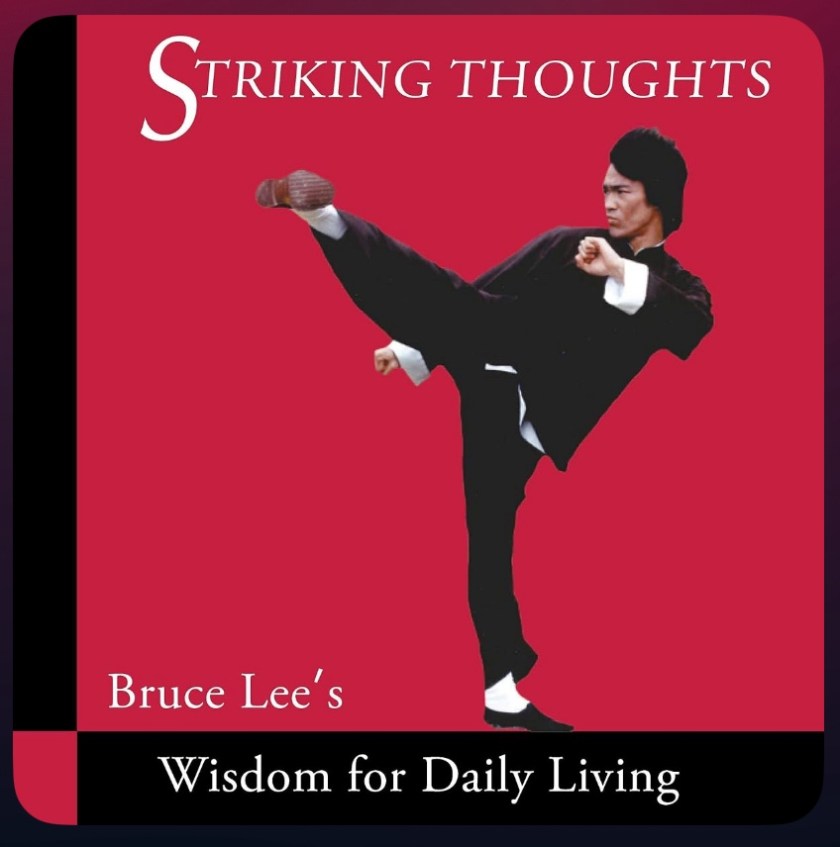
Synopsis:
“A teacher is never a giver of truth—he is a guide, a pointer to the truth that each student must find for himself. A good teacher is merely a catalyst. (Bruce Lee)
Within the chapters of Striking Thoughts, you will find the secrets of Bruce Lee’s incredible success—as an actor, martial artist, and inspiration to the world. Consisting of eight sections, Striking Thoughts covers 72 topics and 825 aphorisms—from spirituality to personal liberation and from family life to filmmaking—all of which Bruce lived by.
His ideas helped energize his life and career and made it possible for him to live a happy and assured life, overcoming challenging obstacles with seeming ease. They also inspired his family, friends, students, and colleagues to achieve success in their own lives, and this personal collection will help you in your journey, too.” -Audible
~If you enjoy my summary, please consider buying me a coffee via my Ko-Fi link (click the button below) or support this blog in one of several ways! 📖 🎓
I appreciate every donation as it goes directly to the maintenance costs of my blog and creation of new content. 😊

Opening thoughts:
I was pretty excited to pick up this book as this seems like a super interesting and insightful read. Bruce Lee, in my brain, was just as much a philosopher as he was a martial artist and filmmaker. I feel like this book will have so many nuggets of wisdom from an unconventional source.
Key notes:
Section: Recollections on the thought of Bruce Lee
Part One: On First Principles
Chapter 1: Life
- The usefulness of a cup is in its emptiness
- Life is constant movement, change, and growth. Things live by moving and gain strength as they go
- Some parts of life will be unpleasant and leave a scar. But like water, it goes stale if it doesn’t move
- To live is to create and to express
- Enjoy your planning as well as your accomplishments, for life is too short for negative energy
Chapter 2: Existence
- Thought and existence are intertwined
Chapter 3: Time
- Think of the past in terms of events, memories, and accomplishments that were pleasant, rewarding, and satisfying
- Think of the present as challenges and opportunities and the rewards available for the application of your talents and energies
- The future is a time and a place where every worthy ambition you possess is within your grasp
- Knowledge is of time whereas knowing is not of time
- We all have time to either spend thoughtfully or waste carelessly
- If you love life, don’t waste time
Chapter 4: The Root
- Concentration is the root of all higher abilities in man. Seek to understand the root
- What we are after is the root and not the branches
Chapter 5: The Now
- The now covers all that exists
- We are all in the process of becoming
- The now is total awareness, the space created between what is and what should be
Chapter 6: Reality
- Reality and perception is different
- Experiencing is believing
- Reality is apparent when one ceases to compare
- To live with what is is to be peaceful
Chapter 7: The Laws
- The law of self-will
- The law of cause and effect
- The law of identity
- The law of harmony
- The law of non-interference with nature
Chapter 8: Interdependency
- The world and I are in active correlation
- Both exist for each other
- Subjects and objects are complimentary
Chapter 9: The Void
Chapter 10: On Death
- Donlt neglect life by worrying about death
Part Two: On Being Human
Chapter 11: The Human Being
- The goal of a human is to actualize oneself
- A human being is a creative animal
Chapter 12: Action
- Knowing is not enough, we must apply
- Willing is not enough, we must do
- Action is a high route to confidence and self-esteem
Chapter 13: Wu-wei (natural action)
- Wu-wei is spontaneous action without prearrangement
- Don’t seek, but allow. Let go
- It ensures the spirit of harmony with nature
Chapter 14: The Mind
- An intelligent mind is an inquiring mind, which never ceases to learn
- Thought is the response of memory, and memory is always partial because memory is the result of experience
- So thought is the reaction of a mind which is reconditioned by experience
Chapter 15: Thinking
- Sincere thought means thought of concentration, quiet awareness
- Knowledge: the remembering of previously learned material
- Comprehension: the ability to grasp the meaning of material
- Usage of knowledge: by interpreting material or projecting future trends in the use of knowledge
- Application: the ability to use learned material in new and concrete situations
- Analysis: the ability to break down material into component parts so that its organizational structure may be understood. Synthesis: the ability to put parts together to form a new whole. Evaluation: the ability to put parts together and to judge the value of the material for a given purpose
Chapter 16: Concepts (Abstracting)
- Liberate yourself from concepts that stop you from seeing with your own eyes. It only requires openness and freedom to see
- Balance your thoughts with action
- Concepts prevent feeling
- Don’t think. Feel and be present in the here and now
Chapter 17: Knowledge
- Knowledge will give you power, but character will give you respect
Chapter 18: Ideas
- Ideas are the beginning of all achievement. New ideas are always rewarded
- 4 idea principles:
- Find a human need, an unsolved problem
- Master all of the essentials of the problem
- Give a new twist to an old principle
- Believe in your idea and act
- An idea by itself is not erroneous, but judgment makes it
Chapter 19: Perception
- Perception is the way of truth
- The perceiving mind understands truth
- The enemy of development is this pain phobia
- The unwillingness to do a tiny bit of suffering
- Choiceless awareness is non-judgmental observation
Chapter 20: The Ego (Self-consciousness)
- A person should use his ego, and not be used by ego or be blinded by it
- On humbleness: to be humble to superiors is duty, to equals is courtesy, to inferiors is nobleness, and to all is safety
- We can see through others only when we see through ourselves
Chapter 21: Concentration
Chapter 22: On Reason
Chapter 23: Emotion
- Every emotion expresses itself in the muscular system
- Emotions can be either positive or negative
- We must work to strengthen the positive ones and convert the negative ones into useful actions
Chapter 24: Happiness
- Having a good partner is one of the best fortunes. They should be friends and understand each other
- Happiness requires action, and anybody can obtain happiness
Chapter 25: Fear
- There is fear and insecurity in pride
- Live without being dependent on the opinion of others. We are completely self-sufficient, we will have no fear of not being esteemed by others. The more we value things, the less we value ourselves. We depend on others for self-esteem, the less we are independent and self-sufficient
Chapter 26: Will
- The power of the will is the Supreme Court over all other departments of your mind
- There is no weapon more deadly than the will
- The aim of a self-willed person is growth
Chapter 27: Good Will
- Try not to offend or be easily offended
- Real living is living for others
- Watch what you say; diseases enter through the mouth
- If everybody helped their neighbor, nobody would be without help
- Let friendships develop naturally and slowly
- If it rushes, it can also burn out quickly
- Without respect, love cannot go long
- Be proficient in your field as well as in harmony with others
- A person cannot forget someone who is good to them
Chapter 28: Dreams
- Be a practical dreamer backed by action
Chapter 29: Spirituality
- When a person begins to use the spiritual forces inside themselves for life, their progress in the future will be unparalleled
- Intensity and/or enthusiasm is like a god within us
- He does not believe in god nor has an organized religion
- He believed god exists within
- Life is a process and man is a self-made product
- Happiness is good for the body, but sorrow strengthens the spirit
- Character is to the soul what outward appearance is to the body
Part Three: On Matters of Existence
Chapter 30: Health
- Jogging is not only exercise but also theraputic because you’re alone with your thoughts
- Diet: only eat what your body requires and don’t become carried away with foods that don’t benefit you
- Good health is balance between the sensory system and the motor system
Chapter 31: Courtship
Chapter 32: Love
- Love is never lost. If not reciprocated, it will flow back and soften the heart
- Absence and love is like water and fire. A little quickens the fire, but a lot extinguishes it
- Love is mathematically just. Love and you shall be loved
Chapter 33: Marriage
- Marriage derived from everyday life lasts longer
- Young love is like bright fire that burns brightly and filed with excitement but is extinguished quickly
- Ordinary love in marriage burns deeply and is more resilient
Chapter 34: On Raising Children
- The highest standard of conduct consists of treating others as you wished to be treated, plus loyalty, intelligence, and the fullest development of the individual
- Parents must know when to be serious and say what needs to be said without worrying about if their kids like it
Chapter 35: Education
- What is the point of education if you are not intelligent or creative?
- Education is the cultivation of intelligence, not cultivating cunning or passing exams
- Self-education makes great people
- Education is to discover but not merely to imitate
- Learning techniques without inward experiencing can only lead to superficiality
- It’s not how much you have learned, but how much you have absorbed in what you have learned
- The best techniques are the simple ones executed right
Chapter 36: Teaching
- Teaching requires a sensitive mind with great flexibility
- A teacher studies each individual student and awakens in them to explore themselves internally and externally to integrate themselves into their being
- A teacher is a pointer of truth, not a giver of truth
- The spiritually deficient search for external securities
- The poorer we are inwardly, the more we try to enrich ourselves outwardly
Chapter 37: Ethics
- The good life is a process, not a state of being
- A direction, not a destination
- The trouble of man lies in the love for self
- Humility forms the basis for honor
Chapter 38: Racism
- Tradition is the root is racism as many people are bound by it
- These people seldom use their own mind to find the truth of something and seldom express sincerely their feelings
Chapter 39: Adversity
- Adversity leads us to think properly about our state so it is beneficial
- It causes the mind to think properly
- Never waste energy on worries and negative thoughts
- Anxiety is a defense. Don’t be forecasting evil unless it is what you can guard against
- Anxiety is good for nothing if we can’t turn it into a defense
- Anxiety is a defense. Don’t be forecasting evil unless it is what you can guard against
- It is not what happens that counts, it is how you react to them
- Your mental attitude determines what you make of it
- Adversity shocks you to higher levels
- In solitude you are least alone
- Without frustration, you will not discover that you might be able to do something on your own. We grow through conflict
- Patience is concentrated strength, not passive
- Don’t add worry to your troubles
- Accept your troubles and face them
- One who is possessed by worry not only lacks the poise to solve his own problems, but his nervousness and irritability create additional problems for those around him
Chapter 40: Confrontation
Chapter 41: Adaptability
- Be flexible so you can change with change
- The usefulness in a cup is in its emptiness
- The bamboo bends with the wind and survives
- Be like water
Chapter 42: Philosophy
- Study philosophy and read all kinds of books
Part Four: On Achievement
Chapter 43: On Work
- Intense desire can create its own opportunities as well as its own talent
Chapter 44: Quality
- He has a sincere desire to do things right and never sacrifice quality
- The only reward is IN the action, not from it
- Aim for perfection in all things, even though it is generally unattainable in most things
Chapter 45: Motivation
- It’s not what happens in our life that is important, it’s how we react to what happens
- Suffering is mostly self-manufactured
- Joy and suffering are the result of right and wrong thinking
- No person is defeated unless he is discouraged
- The problem is in anticipation of suffering
- Optimism is a faith that leads to success
Chapter 46: Goals
- Goals give life substance and meaning
- A goal is not always meant to be reached. It often serves simply as something to aim at
- Don’t fear failure, but fear aiming too low
- Attitude determines altitude
- You’ll never get more out of life than you expect
- Every person today is the result of their thoughts yesterday
Chapter 47: Faith
- Faith without work is death
- Faith backed by action is applied faith
Chapter 48: Success
- Success is not luck. You have to create your own luck, and be aware of the opportunities and take advantage of them
- Key to success: persistence
Chapter 49: Money
- Money is only a means with a purpose, not an end
- Doing the thing you enjoy is most important
Chapter 50: Fame
Chapter 51: Flattery
- When a person seeks your advice, they generally wants your praise
Part Five: On Art and Artists
Chapter 52: Art
- Art is the expression of the self
- Art requires creativity and freedom
- Art is a technique for acquiring liberty
- The aim of art is to project an inner vision to the world without
- Art reflects the soul. An artist must be an artist of life
Chapter 53: Film Making
Chapter 54: Acting
- An actor encompasses the entire human being, which is different from what people call a “movie star”
Part Six: On Personal Liberation
Chapter 55: Conditioning
Chapter 56: Systems
- Doctrines prevent us from really seeing
- The individual is the most important, not the system
- A person is constantly growing
- And when they are bound by a set pattern of ideas or way of doing things, that’s when they stop growing
- Do not limit yourself to one approach
Chapter 57: Detachment
- To be detached is to be free of positive and negative
Chapter 58: Nomindedness (Wu-hsin)
- No-mindedness is non-fixation
- It is not being without emotion or feeling, but being one in whom feeling is not sticky or blocked
- It is a mind immune to emotional influences
Chapter 59: Zen Buddhism
Chapter 60: Meditation
- Real meditation puts you in the now
- Meditation is without motive
Chapter 61: On Being Centered
Chapter 62: Freedom
- Free equals the absence of feeling external constraint
- Freedom is self knowledge
- Freedom lies in understanding yourself from moment to moment
Part Seven: The Process of Becoming
Chapter 63: Self-Actualization
- Being oneself leads to real relationships, and acceptance of self leads to change
- A self-actualizing person is a real person
- When a person has confidence in themselves and all they want in the world is to live out their destiny in freedom and purity, they will come to see the vastly overestimated and costly possessions as mirror accessories
- Pleasant to have, and possibly useful, but never essential
- Learn to actualize yourself and your potential
- The main thing is to listen, to understand, to be open
- Self-realization is enlightenment
Chapter 64: Self-help
- The medicine for suffering is within
- The best help is self help
- The greatest victory is over oneself
- Each person must understand their weaknesses and their strengths
Chapter 65: Self-knowledge
- Self-knowledge involves relationship
- To know oneself is to study oneself in action with another person. Relationship is a process of self revelation
- Relationship is the mirror in which you discover yourself. To be is to be related
- A person is at their worst when they do not understand themselves
- It is easy to criticize and break down the spirit of others. But to know yourself takes maybe a lifetime
- Self-knowledge is true mastery
Chapter 66: Self-expression
- Self expression is important
- Try to convey the significance of what you see. It makes for true relationships
Chapter 67: On Growth
- Growth requires involvement. Becoming aware of your use of “how” and “now” makes you grow
- Growth is the constant discovery and understanding in ones process of living
- Learning is boundless
- Discover + understanding = growth + learning
- To mature means to take responsibility for your life and to be on your own
- Maturing is the transcendence from environmental support to self support
Chapter 68: Simplicity
- Profound simplicity = common sense
- Simplicity is hacking away the unessential
- It is not daily increase but daily decrease
Part Eight: On Ultimate (Final) Principles
Chapter 69: Yin-yang
- Yin-yang is one thing, just the opposite sides that compliment each other and are a function of each other
- Ex: good-evil, pain-pleasure, light and dark
Chapter 70: Totality
Chapter 71: Tao
- Tao is similar to truth, way, principle, or law
- But no direct English translation
Chapter 72: Truth
- The understanding of the problem is the dissolution of the problem
- Truth cannot be limited, structured, or confined
- If you don’t want to slip up tomorrow, speak the truth today
Closing thoughts:
I really enjoyed and loved this book. Each chapter is basically it’s own nugget of wisdom. From a reader perspective, this book is a gold mine or treasure trove of wisdom and insight.
However, as a book summary writer, the process of listening to this book and taking notes was very tedious. It’s the worst combination of many short chapters and 3-5 quotable highlights in each chapter, which means a lot of notes for me to take down.
That being said, this book was very profound and insightful as a reader. Not necesarily actionable, but more a lot of ideas that can shift the way you think. Each handful of chapters is worth reading over several times, digesting, and reflecting on how you can apply in your own life before you move on to the next chapter.
Overall, a very solid book that I would recommend for almost anyone. Definitely in my top favorites for this year.
One Takeaway / Putting into practice:
Compared to other books that might have 3-5 really good takeaways, this book easily has 50+ solid takeaways that could easily change your life by shifting the way you think.
While I think many ideas in this book could be valuable to anyone who reads it, the one takeaway for myself to reflect on would be:
- Self-knowledge involves relationship. To know oneself is to study oneself in action with another person. Relationship is a process of self revelation. Relationship is the mirror in which you discover yourself.
I thought this point was very profound and eye-opening to me personally. As a relationship coach, I understand my inherent bias towards the idea that quality relationships determine the quality of our lives. Moreover, I’m always a big proponent of the lifelong pursuit of self-discovery and a means to happiness and purpose. However, this idea connected the two concepts, which is something I never thought of.
In order to understand ourselves better, we need to seek to understand ourselves in relation to others. It’s like the “theory of relativity” in that everything is relative and relation to other things. This includes ourselves. In order to fully or better know ourselves, we need to study ourselves in relation to others and the world around us.
Nutshell:
Bruce Lee passes along 72 meditations on various topics of how to achieve success, happiness, and peace within one’s own life.
Similar books:
- Awaken The Giant Within by Tony Robbins
- Make Your Bed by William McRaven
- Think Like A Monk by Jay Shetty
- Beyond Religion by the Dalai Lama
- Build the Life You Want by Arthur C. Brooks & Oprah Winfrey
- Meditations by Marcus Aurelius
- Essentialism by Greg McKeown
- The Almanack of Naval Ravikant by Eric Jorgenson
Rating:
4.5/5
Subscribe for More Summaries👇
Try Audible for audiobooks 📚🎧
Personal recommendation: For the last 10 years, I’ve used Audible to listen to all of my favorite books. It’s easy to use, cost-effective, and they have the best library of audiobooks.
If you use my affiliate links below, not only will you get a special offer, but it’ll help support the costs to maintain this blog! 😊👇
Try Audible and Get Two Free Audiobooks

Please donate! 🙂
Please consider a small donation to help support my blog ^_^ I love providing free book notes and other content. Any donations help me maintain my website and create content consistently. Thanks everyone for the continued support!
$2.00
Discover more from Marlo Yonocruz
Subscribe to get the latest posts sent to your email.

3 thoughts on “Book notes: Striking Thoughts by Bruce Lee”